Ask a Lorne Park resident where they walked this weekend and you'll probably get the same answer: "down by the lake." It's shorthand for a stretch of shoreline that most people treat as a single place. It isn't. Jack Darling Memorial Park and Rattray Marsh Conservation Area sit next to each other, share a parking lot, and could not be run more differently. One was built for people. The other was saved from them.
That distinction matters more in fall than any other season, because fall is when the two parks stop looking alike and start acting like what they actually are.
One Municipal, One Provincial, and the Line Between Them
Jack Darling Memorial Park is a City of Mississauga park. It has open lawns, picnic tables, a beach on Lake Ontario, and an off-leash dog area where residents let their dogs run without a line attached to them. It's designed for use. The busier it gets, the more it's doing its job.
Walk to the western edge of that same parking lot and you cross into a different set of rules entirely. Rattray Marsh Conservation Area is owned and managed by Credit Valley Conservation, and it carries provincial designations that Jack Darling doesn't: it's recognized as a Provincially Significant Wetland and an Area of Natural and Scientific Interest, a status that traces back to international recognition of the site in 1969. Cycling isn't permitted anywhere in the marsh. Dogs are welcome, but only on leash. None of this is arbitrary. Rattray is the last remaining lakefront marsh of its kind between Toronto and Burlington, and the rules exist to keep it that way.
The two parks are close enough that most people treat the walk as one continuous loop. It isn't. You're moving from a park that exists for recreation into a wetland that exists in spite of decades of pressure to develop it. Local advocates spent years fighting proposals for luxury homes and a marina on the property before it was preserved and opened as a conservation area in 1975. The Rattray Marsh Protection Association formed a few years later, in 1979, specifically to keep that protection intact, and it's still active today.
What the Signage Doesn't Spell Out
Here's where the difference actually shows up on a Saturday walk, laid out plainly:
| Jack Darling Memorial Park | Rattray Marsh Conservation Area | |
|---|---|---|
| Managed by | City of Mississauga | Credit Valley Conservation |
| Off-leash dogs | Yes, dedicated dog park | No, leash required |
| Cycling | Standard park use, no marsh-style restriction | Not permitted anywhere in the marsh |
| Main draw | Beach, lawns, picnic areas | Boardwalk trails, marsh, birdwatching |
| Trail structure | Open, unstructured | Three marked trails: Knoll (0.3 km), Secondary (1.8 km), Pedestrian (1.1 km) |
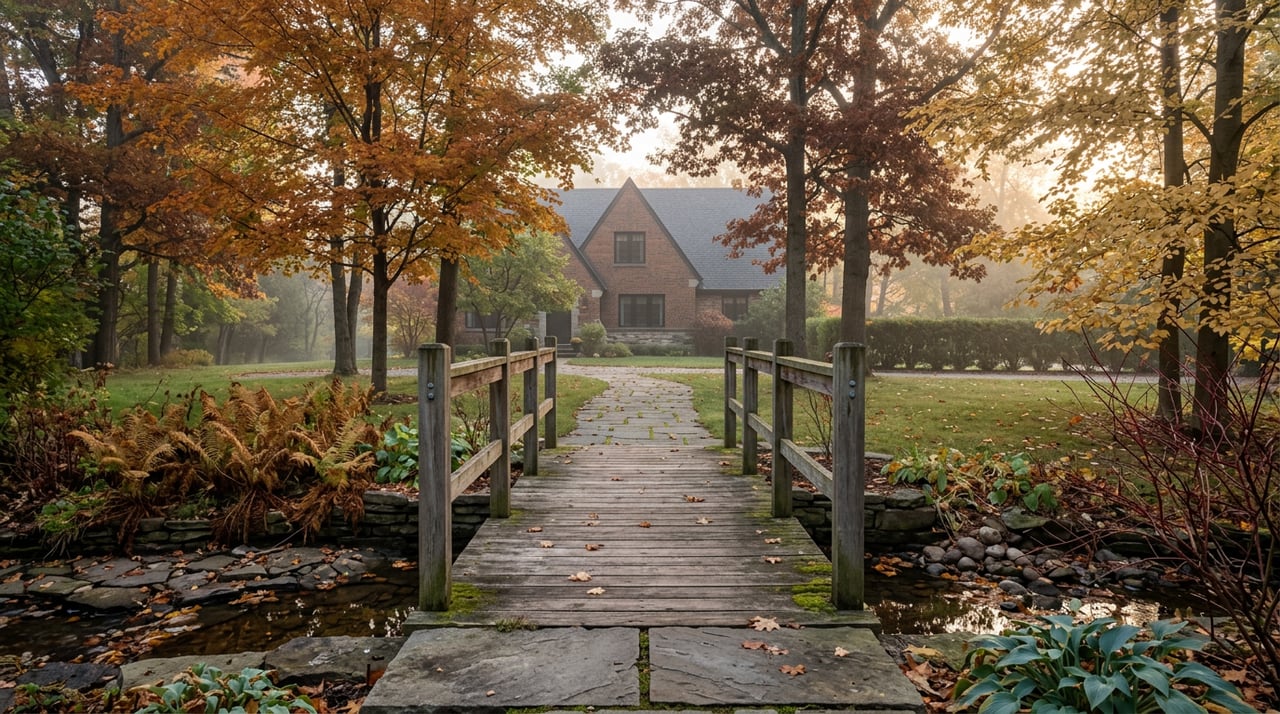
That last row matters if you're planning an actual route rather than a wander. The Knoll Trail is short and ends at a lookout over the marsh, a spot that was rebuilt a few years back with a raised, helical-pile boardwalk specifically so it wouldn't require steps. The Secondary and Pedestrian trails are longer and take you along the shoreline and through the wooded interior, where the tree cover thins out in patches where ash trees had to be removed after emerald ash borer moved through.
Why Fall Is the Season That Tells You Which Park You're In
Mississauga's own parks department points to mid-October through November as the window when the city's tree canopy peaks, and Rattray is one of the spots it names specifically for that reason. But foliage is the easy part. What actually separates the two parks in fall is what's moving through them.
Rattray Marsh sits on a migratory route, and Credit Valley Conservation has documented 227 bird species using the marsh over the years, a mix of songbirds, waterfowl, birds of prey, and shorebirds that pass through in spring and fall waves. It's not a generic "great for birdwatching" claim. Nests of less common species like Great Horned Owl and Eastern Screech Owl have turned up in the marsh in past seasons, the kind of detail that shows up in a naturalist's log, not a tourism brochure. Jack Darling doesn't have that ecological weight to carry. It's still a beach and a dog park in October, just a colder one.
The entrance most people use to reach the marsh from the shared parking lot, known as Turtle Creek, is the single busiest access point in Credit Valley Conservation's entire system, drawing more than 300,000 visitors a year. That volume is worth knowing if you're planning a quiet fall walk. Weekday mornings and early afternoons are a different experience than a Saturday after 10am, when the shared lot fills fast.
The Forest Nobody's Renting
There's a third layer to this that most people who walk the boardwalk never think about. Lorne Park Estates, the private lakefront enclave inside the broader Lorne Park area, isn't managed by the city or by Credit Valley Conservation at all. The Lorne Park Estates Association, founded in 1948, is a corporation without share capital whose members own the common lands directly and are responsible for maintaining the roads and the Carolinian forest that surrounds them, a forest the association describes as home to more than 300 plant and wildflower species and roughly 220 bird species. It's a private stewardship arrangement that predates the conservation authority system entirely, run by residents rather than a government agency.
So the fall walk that looks like one continuous shoreline is actually three different governance models stacked next to each other: a municipal park built for use, a provincially protected wetland preserved from use, and a private residents' association quietly maintaining its own forest in between. None of it is signposted that way. All of it changes how you should plan the walk.
Where the Walk Actually Ends
If the walk runs long enough to want dinner after, Lorne Park has its own answer, and it isn't in a strip along Lakeshore. The Park Steakhouse sits at 1107 Lorne Park Road, tucked into an unassuming local strip mall that gives no hint of what's inside. It's a steakhouse and wine bar built around USDA Prime beef sourced from Creekstone Farms, with a cocktail program built on Prohibition-era classics and a Date Night Thursday menu that regulars specifically plan around. It's the kind of place residents describe as a hidden gem precisely because it doesn't advertise itself to anyone outside the neighborhood.
That's the pattern that runs through all of this. Lorne Park doesn't announce what it has. The dog park and the protected marsh sit forty feet apart and most people never register that they're governed by different rules for different reasons. The private forest inside Lorne Park Estates has been maintained by its own residents since 1948 without a single city sign explaining it. The steakhouse two minutes from the water doesn't need a storefront on a main road because the people who live here already know where it is.
Knowing the difference between the two parks doesn't change your Saturday plans much. But it's the kind of local detail that separates a resident from a visitor, and in a neighborhood built on quiet stewardship rather than announcement, that distinction is the whole point.
If you're ever curious what a home in this stretch of Lorne Park is actually worth given how tightly held it is, Shahid Khawaja RE can put together a straightforward valuation with the kind of local read this market actually requires. Get your valuation whenever you're ready, no pressure attached.