You are weeks from getting keys to your new Churchill Meadows condo, and the excitement is real. Before you move in, your pre-delivery inspection is your best chance to catch and document issues while the builder is still on site. A focused PDI protects your investment and supports your warranty rights if problems pop up later. This guide gives you a clear, local checklist so you can walk in confident and walk out covered. Let’s dive in.
What a PDI is and why it matters
A pre-delivery inspection is a formal walkthrough with the builder or their representative to record any deficiencies before you take occupancy. It is separate from the warranty claim process. The PDI creates a dated record of items the builder should fix and supports future warranty claims if needed.
In Ontario, new condos are covered by the Tarion warranty program under the Ontario New Home Warranties Plan Act. Coverage is staged: year 1 for workmanship and materials, year 2 for major systems and water penetration, and year 7 for major structural defects. Your PDI notes help you report items within these timelines.
Many buyers in Mississauga take interim occupancy before final closing. During interim occupancy, you live in the unit, but title has not transferred. The developer usually still controls the condo corporation and common elements, and some amenity work may be ongoing. Complete and sign your PDI before accepting possession.
Who should attend and how to schedule
You should attend in person if at all possible. Your real estate agent can add experienced eyes and help you keep the process organized. The builder’s representative must be present to acknowledge your deficiency list. If you cannot attend, appoint an authorized representative in writing. Many buyers also hire an independent new-home inspector who understands Tarion processes. Confirm that the builder will allow a representative or inspector.
Builders typically schedule PDIs in advance and allow 30 to 60 minutes per suite. Confirm the appointment time, whether only one walkthrough is allowed, and what areas are included. Ask for the builder’s PDI form ahead of time and review your finish schedule so you know what you purchased.
What to bring on PDI day
Bring the documents and basic tools that make your inspection efficient.
- Purchase agreement, finishes list, and floorplan
- Builder’s PDI form and any warranty documents provided
- Smartphone or camera with date and time enabled
- Tape measure, small level, and a flashlight
- Notebook, pen, and a printed checklist
If access to your parking stall or locker is promised, confirm it’s included in the appointment. Some underground areas near turnover may still be under construction, so plan ahead.
Your first 15 minutes: priorities
If time is tight, focus on items that affect safety and major systems first. You can circle back for cosmetic items.
- Safety: smoke and CO detectors, handrails, glass and guardrails
- Mechanical: heating, cooling, ventilation, hot water
- Plumbing: visible leaks, toilet stability, drainage, water pressure and hot water
- Exterior openings: doors and windows for operation, drafts, and obvious leaks
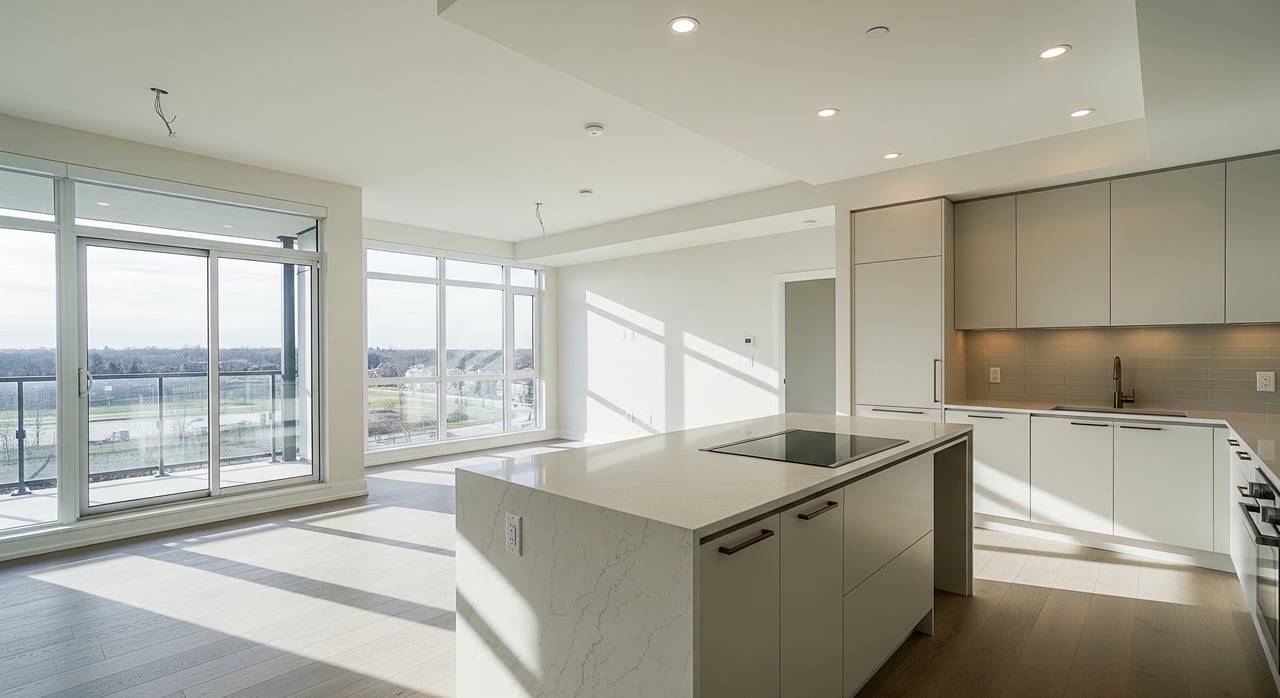
- Kitchen and baths: appliance operation, cabinet alignment, and ventilation
- Floors and baseboards: gaps, buckling, scratches, and transitions
Room-by-room PDI checklist
Use this systematic list to stay organized and ensure everything is recorded on the builder’s form.
General interior
- Walls and ceilings: paint quality, scuffs, nail pops, cracks, texture consistency, color matches your schedule
- Floors: scratches, chips, gaps at transitions, squeaks, uneven surfaces, missing grout or finish
- Doors and trims: hinges tight, doors square and latching, weatherstripping at entry, locks and hardware working
- Windows: smooth operation, locks functioning, no fogging between panes, complete caulking and trim
- Electrical: lights and dimmers working, outlets grounded, GFCI where required, correct faceplates
- Smoke and CO detectors: present and operational if testing is permitted
- Closets: shelving installed, sliding doors align and glide smoothly
- Caulking and sealant: no gaps around tubs, counters, windows, and backsplashes
Kitchen
- Cabinets and drawers: alignment, soft-close if specified, no missing hardware, no finish damage
- Countertops: no chips, clean seams, secure mounting, proper sink cutouts
- Sink and faucet: hot and cold function, drainage speed, no visible leaks
- Appliances: confirm operation for fridge, range and oven, dishwasher, and hood fan; photograph serial and model numbers for warranty
- Backsplash and tile: even grout lines, consistent color, no chipped tiles or lippage
Bathrooms
- Fixtures: toilets firmly anchored without wobble; proper flushing or dual-flush function
- Showers and tubs: complete caulking, even grout, doors seal and slide well, floor slopes to the drain
- Ventilation: exhaust fan operates and vents correctly
- Mirrors and cabinets: secure mounting and aligned doors
- Water supply: test hot water and pressure at multiple fixtures if feasible
Mechanical, HVAC, and utilities
- Heating and cooling: system powers on; thermostat responds and displays
- Hot water: temperature present; no leaks near the heater or mixing valves
- Utility closet: safe clearances, labeled shutoffs for water and gas, accessible filters
- Noise and vibration: note unusual sounds when systems start or stop
Plumbing specifics
- Taps and shower heads: run and check for visible leaks under sinks and at connections
- Drains: sinks, tubs, and any floor drains clear and flowing; balcony floor drains unobstructed
- Shutoff valves: present and accessible for sinks, toilets, and hot water
Electrical specifics
- All fixtures and switches: test on and off, dimmers, and three-way switches
- Outlets: test every outlet you can reach, including on balconies if provided
- Smart systems: intercom, access panels, or any smart features operate as sold
Balcony or terrace
- Surface: even finish; slope to drain; no standing water
- Guardrails and glass: secure, correct height, free of chips or cracks
- Exterior seals: intact weatherstripping at doors and thresholds
Parking, locker, and storage
- Parking: correct stall number and signage; access device works; note slab condition and paint
- Locker: correct number; door and lock work; verify size and racking if included
Common elements and amenities
- If open: note visible deficiencies, incomplete finishes, or temporary closures
- If not complete: record builder’s stated timelines for completion
Documentation to collect
- Appliance model and serial numbers; take photos for your records
- Signed builder PDI form with the full deficiency list and date
- Manuals, maintenance and warranty info, and any as-built instructions
- Any interim occupancy documents the builder provides
Common new-condo defects to expect
It is normal to find small issues during a PDI. Record everything.
- Cosmetic: paint touchups, grout stains, small chips or scratches
- Cabinetry: misaligned doors, rubbing or sticking drawers, veneer lifts
- Flooring: unfinished expansion gaps, loose or hollow tiles, squeaks
- Windows and doors: binding in frames, incomplete caulking, condensation between panes
- Plumbing: slow drains, drips at supply lines, toilet movement
- HVAC: unbalanced airflow or minor fan noise
- Balcony: ponding water or missing weep points
- Appliances: features not calibrated or not operating as expected
After the PDI: fix, follow up, and warranty
Create a clear record. Photograph each deficiency with a wide shot and close-up, and keep everything with date and time. Make sure every issue is listed on the builder’s PDI form. If something is missing from the builder’s list, send your own written list with photos by email for a timestamped record.
Ask the builder to provide a target timeline for repairs. Safety or system issues should be prioritized before or shortly after occupancy. Cosmetic items are often scheduled post-occupancy, but they still matter and should stay on the list.
If items are not resolved within a reasonable time, Tarion provides a process to escalate for enrolled homes. Keep track of the 1-, 2-, and 7-year coverage windows and submit warranty forms on time. Your PDI notes help prove the condition at the start.
Local tips for Churchill Meadows and Erin Mills
Churchill Meadows is a mature, master-planned Mississauga community with ongoing low- and mid-rise development. PDIs here follow the same Ontario rules described above. Builders in Peel generally use standard PDI scheduling, but always confirm who can attend and whether inspectors are permitted.
Traffic can be heavy near major corridors. Plan extra time to arrive, and allow buffer for deliveries or repair follow-ups after move-in. If your parking or locker is underground, request access in advance because some areas can still be under construction around turnover.
If common elements are actively being finished, ask about safe access during your PDI and whether building systems like HVAC are fully commissioned. If something cannot be tested yet, record that you could not verify operation and note the builder’s timeline for activation.
Quick PDI day checklist
Use this 10-minute scan to make sure nothing big is missed.
- Test smoke and CO detectors and main lights
- Run taps, flush toilets, and check for leaks and hot water
- Turn on HVAC and verify airflow and thermostat response
- Open and lock all windows and exterior doors
- Check balcony slope and rail security; no standing water
- Test major appliances and hood fan
- Look for floor and countertop damage and loose trims
- Verify GFCI outlets in kitchens and baths
- Photograph appliance serial numbers and every deficiency
- Get a signed, dated copy of the full PDI list
Ready to make your PDI simple and effective? If you want a second set of experienced eyes or need help coordinating the process around interim occupancy, our Mississauga-based team is here to guide you from walk-through to warranty timelines. Connect with SHAHD KHAWAJA REAL ESTATE INC BROKERAGE to plan your PDI with confidence.
FAQs
What is a PDI for a Churchill Meadows condo?
- A pre-delivery inspection is a walkthrough with the builder to document deficiencies before you take occupancy; it creates the baseline for repair and future warranty claims.
How does Tarion warranty coverage work for new condos?
- Coverage is staged: year 1 for workmanship and materials, year 2 for major systems and water penetration, and year 7 for major structural defects; report items within these timelines.
Can my agent or an inspector attend my Mississauga PDI?
- Yes, you can authorize your agent or a qualified new-home inspector; confirm in writing that the builder allows your representative to attend and conduct the inspection.
How long should I plan for a condo PDI?
- Most builder-led PDIs take 30 to 60 minutes; independent inspections often run 1 to 2 hours depending on suite size and systems.
Does signing the PDI mean I accept the unit as-is?
- No; signing acknowledges attendance and noted items, but it does not waive your warranty rights; insist all observed deficiencies are listed on the builder’s form.
What if I cannot test an item during the PDI?
- Record that it could not be tested and note the builder’s timeline for activation or access; follow up in writing and test as soon as systems are live.
What are common defects in new Churchill Meadows condos?
- Expect cosmetic paint and grout touchups, cabinet alignment issues, minor plumbing drips, HVAC balancing, and balcony drainage concerns; document all items with photos.